01/15/26
Best of the West: Shared Stewardship supports healthy forests; Waterless geothermal pilot; AZ Poet Laureate, Novel energy storage project; and a new avalanche detection system
.png)
The Western Governors' Association keeps you updated on the latest news in the West. Here are the top stories for the week starting January 12, 2026. (Photos courtesy of the Office of Utah Governor Spencer Cox, the Office of Montana Governor Greg Gianforte, Rodatherm, and the Office of Arizona Governor Katie Hobbs).
Western forests are under frequent threat from catastrophic wildfires, invasive species, diseases, and other bad outcomes. Making matters more difficult, western landscapes are divided among a patchwork of federal, state, tribal, and private ownership, making holistic management of our forests a challenge.
Enter Shared Stewardship, which spurs collaboration between land managers to support healthy forests across jurisdictional lines. Shared Stewardship agreements help states work alongside federal agencies or tribal land managers to support landscape health, recognizing that wildfires, pests, and diseases don’t adhere to boundaries or borders.
In 2018, WGA was proud to be the first non-federal entity to sign a shared stewardship agreement with the US Department of Agriculture (USDA) Forest Service. The historic MOU established a “framework to allow the Forest Service and WGA to work collaboratively to accomplish mutual goals, further common interests, and effectively respond to the increasing suite of challenges facing western landscapes.” Since then, WGA and individual western states have continued to lean on shared stewardship agreements to effectively manage western forests. In 2024, Western Governors signed an updated and expanded MOU with USDA to continue Shared Stewardship priorities.
Last week, the state of Utah entered into a 20-year cooperative agreement with the Forest Service to collaboratively manage national forest land across the state. The agreement will give Utah a more active role in forest management projects occurring on federal land within the state.
“Utah knows how to manage land well and has done so successfully, side-by-side with federal partners for decades. This agreement doesn’t change who owns or controls national forests. It simply lets us work together more efficiently,” said Governor Spencer Cox. “This agreement allows us to combine capacity, funding and expertise so we can quickly and more effectively care for our forests now and far into the future.”
Last month, the state of Idaho and the Forest Service renewed a Shared Stewardship agreement to reduce fire risk through targeted logging efforts and timber sales. Governor Brad Little said that the agreement will protect communities, improve forest health, and strengthen local economies.
Last summer, Montana Governor Greg.jpg) Gianforte signed a 20-year shared stewardship agreement with the Forest Service to collaboratively manage upwards of 200,000 acres of forest land in Montana. The agreement establishes a new state-federal partnership to increase the pace and scale of forest restoration, wildfire risk reduction, and sustainable timber production across the state.
Gianforte signed a 20-year shared stewardship agreement with the Forest Service to collaboratively manage upwards of 200,000 acres of forest land in Montana. The agreement establishes a new state-federal partnership to increase the pace and scale of forest restoration, wildfire risk reduction, and sustainable timber production across the state.
In Arizona, Governor Katie Hobbs signed a Shared Stewardship partnership with USDA in 2024 to help identify cross-boundary solutions, implement mutual science-based priorities, and increase forest health restoration. The agreement was also part of the Forest Service’s Wildfire Crisis Strategy in the Southwest, which focused on 21 priority landscapes in the West for fuel reduction efforts to protect communities from wildfire.
Since 2018, numerous western states have entered into Shared Stewardship agreements to tackle a wide range of landscape management projects. Other western states with such agreements on the books include California, Colorado, Hawai'i, Nebraska, Nevada, New Mexico, Oklahoma, Oregon, Texas, Washington, and Wyoming.
For more on Western Governors’ policy on Shared Stewardship, read WGA Policy Resolution 2024-02, National Forest and Rangeland Management.
Waterless geothermal pilot: Utah-based geothermal company Rodatherm is moving forward with a unique, closed loop geothermal energy system that generates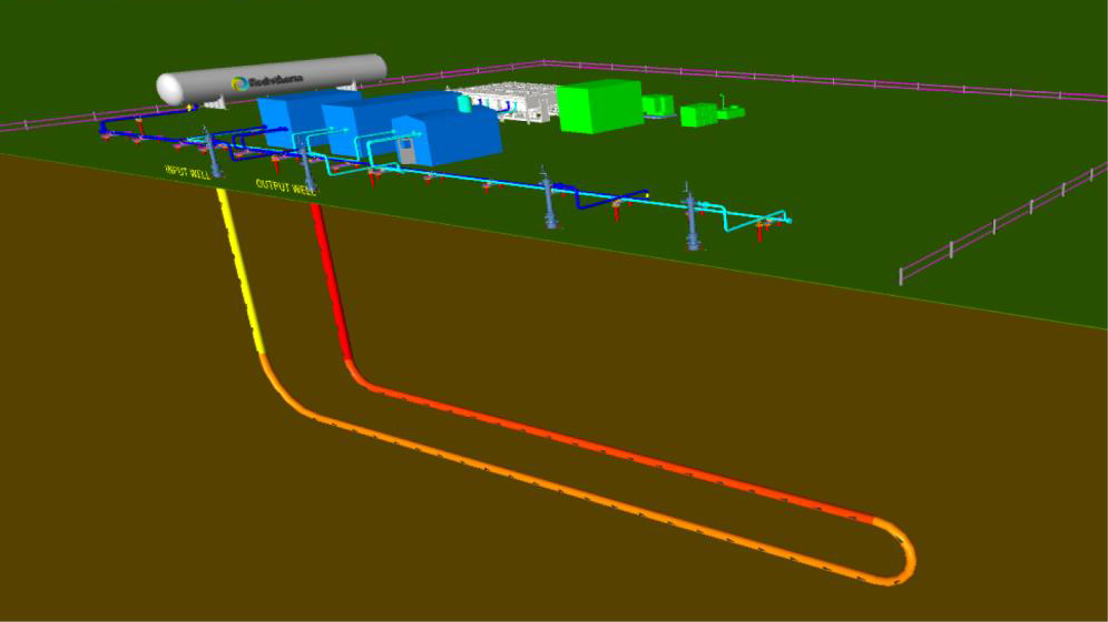 power without using water. The technology mimics a large heat pump situated as far as two miles underground, which the company says is 50% more efficient than water-based geothermal. The technique uses a fully isolated fluid within the power-generating system, instead of fracturing deep underground reservoirs to generate energy.
Rodatherm landed a record $38 million in Series A funding in September, and the company hopes to complete a pilot system in Utah by the end of the year. The site could then expand to generate roughly 100 MW in the future.
For more on geothermal energy in the West, check out the Heat Beneath Our Feet initiative from Colorado Governor Jared Polis’ term as WGA Chair.
 Arizona Poet Laureate: this week, Arizona Governor Katie Hobbs appointed Dr. Laura Tohe as the state’s second Poet Laureate. Since 2012, the position of Arizona Poet Laureate has championed the art of American poetry, inspired an emerging generation of literary artists, and educated Arizonans about poets and authors who have influenced the state through creative literary expression.
“I’m thrilled to appoint Laura Tohe as Arizona Poet Laureate,” said Governor Hobbs. “Over the course of her career, Dr. Tohe has distinguished herself as a poet, librettist, and writer of both fiction and nonfiction. She is a storyteller whose words reflect the heart, history, and hopes of our state. As Poet Laureate, Dr. Tohe will continue Arizona’s tradition of creativity and help inspire the next generation of writers.”
Novel energy storage technology: in California, a unique large-scale energy storage project could soon break ground in rural Kern County. Unlike common lithium-ion battery storage, the Willow Rock project from Hydrostor compresses air underground and releases it to turn turbines and send power to the grid.
The facility will have the capacity to store 500 MW of power and can run continuously for eight hours. It’s expected to support a total of 700 jobs and account for $500 million in direct and indirect economic impacts.
Radar for avalanche safety: upwards of 6 feet of snow has fallen in the Alaskan capitol of Juneau since Christmas, which has sunk boats, collapsed roofs, and set off avalanches on nearby slopes. Some residents remained under an avalanche evacuation advisory for weeks following the storm.
To better prepare for dangerous avalanches coming off Mount Juneau, the city is installing a new radar-equipped avalanche detection system. The technology constantly monitors the mountain for avalanche activity, and it can give forecasters detailed information about the size, speed, and path of avalanches in real time. The data will help keep residents safe and allow forecasters to make more accurate predictions about the likelihood of avalanches.