06/25/26
Best of the West: Prepping for wildfires; Major housing legislation; Quantum computing boost; Hanging Lake restored; and surf’s up in Utah

The Western Governors' Association keeps you updated on the latest news in the West. Here are the top stories for the week starting June 22, 2026. (Photos courtesy of Adobe Stock Images, the Office of Montana Governor Greg Gianforte, and the Office of California Governor Gavin Newsom).
One of the driest winters on record across much of the West has land managers and wildland firefighting crews gearing up for what is already proving to be an especially active summer fire season.
Just this week, the Cottonwood Fire in southwestern Utah has grown and prompted evacuations, while the Dry Creek Fire in Colorado has encroached on buildings, and numerous other fires continue to burn across the region.
Thankfully, western states have been actively gearing up for tough fire seasons like this one through long-term management agreements such as Shared Stewardship and Good Neighbor Authority to reduce overall wildfire risk, and shorter-term tactics like improved detection systems and new staff and equipment to fight active fires.
On the long-term management side, Shared Stewardship and Good Neighbor Authority agreements have proven to be effective and essential tools to manage fuels and reduce fire risk.
WGA was proudly the first entity outside of the federal government to sign a Shared Stewardship agreement with USDA back in 2018, and since then, western states have routinely adopted similar agreements. Shared Stewardship deals allow state, federal, local, and tribal land managers to work collaboratively across various boundaries and land ownerships.
Western states have adopted a series of new agreements in just the past few months. In December, Idaho Governor Brad Little signed a Shared Stewardship MOU with Forest Service Chief Tom Schultz to advance forest restoration and reduce wildfire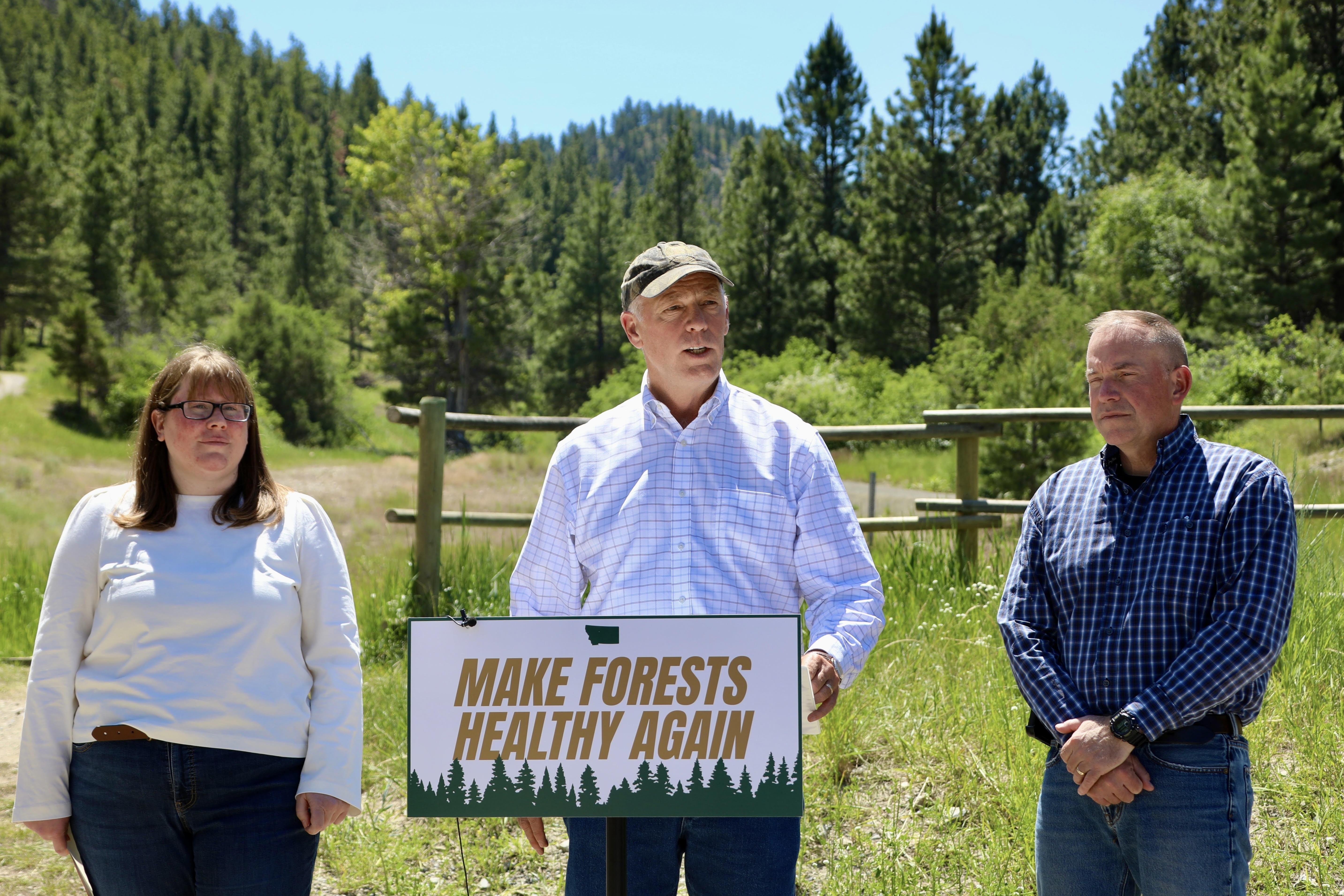 risk.
risk.
A month later, Governor Spencer Cox signed a similar agreement in Utah. This one focused on restoring landscapes, revitalizing timber production, and protecting communities from wildfire risk.
Other recent agreements were signed by Governor Greg Gianforte in Montana, the Alaska Department of Natural Resources, the Colorado Department of Natural Resources, and the Cow Creek Band of Umpqua Tribe of Indians in Oregon.
Stay tuned for WGA’s upcoming Annual Meeting next Tuesday through Thursday (June 30 - July 2), where U.S. Forest Service Chief Tom Schultz will join Western Governors for an in-depth discussion about Shared Stewardship and evolving land management practices.
While long-term management is essential to keeping risk down and preventing fires from exploding in size, wildfires remain a constant threat across much of the western landscape. 
To better detect fires and respond quickly, western states have been building out their firefighting capabilities through staffing and equipment upgrades.
In California, Governor Gavin Newsom recently announced that the state had expanded its aerial firefighting fleet with a third C-130 Hercules airtanker, nearly doubled CAL FIRE’s fire protection budget, unveiled the first-ever statewide LiDAR maps, and more.
In Colorado, the state has added more helicopters, airtankers, and fire engines to its arsenal in recent years, in preparation for dry years like this one.
"While the risks have increased, our preparedness has grown exponentially," said Governor Jared Polis recently.
For more on Western Governors’ bipartisan wildfire policy, read WGA Policy Resolution 2024-02, National Forest and Rangeland Management.
Major housing legislation: this week, Congress passed the bipartisan 21st Century ROAD to Housing Act, which represents one of the most significant housing packages in decades.
The legislation would help address urgent housing shortages across the country and accelerate much-needed housing development.
For Western Governors’ bipartisan perspective on the legislation, read a recent letter emphasizing the urgency of addressing the nation’s housing challenges.
Additionally, read the BRAND West initiative report from New Mexico Governor Michelle Lujan Grisham’s term as WGA Chair, which laid out federal recommendations for addressing housing needs. Many of the report’s recommendations are found in the 21st Century ROAD to Housing Act.
Quantum boost: on Monday, President Trump signed a pair of executive orders to boost quantum technology and computing. The first order directs the Department of Energy to develop a functional quantum computer within the next 5 years.
The second order instructs federal agencies to incorporate post-quantum cryptography by 2031.
For more on the rapidly evolving world of quantum technology in the West, check out a recent episode of the Out West Podcast which explores the future of quantum with Colorado Governor Jared Polis.
Hanging Lake restored: years after the Grizzly Creek Fire and subsequent flooding destroyed parts of Colorado’s iconic Hanging Lake trail, the hike has now been fully restored and improved.
A coalition that included the U.S. Forest Service, the National Forest Foundation, the City of Glenwood Springs, Colorado Parks and Wildlife (CPW), Great Outdoors Colorado (GOCO) and other organizations worked together to rebuild a series of bridges, stone steps, boardwalks, and safety features along the trail.
Surf’s up in Utah: the next Olympic sport coming to Utah is... surfing? That’s the idea behind a new development in Draper that’s set to include a massive wave pool meant for surfing.
Once it’s built, the facility will be the official Olympic training venue of the U.S. Men's and Women's surfing team. It will be able to generate waves as high as eight feet, and it will help athletes train on the same types of waves often found in San Clemente, California, which will host surfing at the 2028 Olympic games.