02/05/26
Western Governors outline legislative priorities in 2026 State of the State addresses
_2.png)
Several Western Governors are delivering State of the State addresses in 2026. Below is a roundup of the speeches delivered so far. The word cloud above represents common issues mentioned by the Governors in their State of the State addresses.
Alaska Governor Mike Dunleavy used his final State of the State address to spotlight a “huge milestone” for Alaska’s economy: the start of construction on the Alaska LNG project. He also proposed expanding “earn-as-you-learn” workforce programs and announced a new partnership among the state, the Alaska Housing Finance Corporation, and municipalities to boost first-time homeownership through buildable land, competitive mortgage rates, lower down payments, and targeted tax incentives.
Watch a recording here.
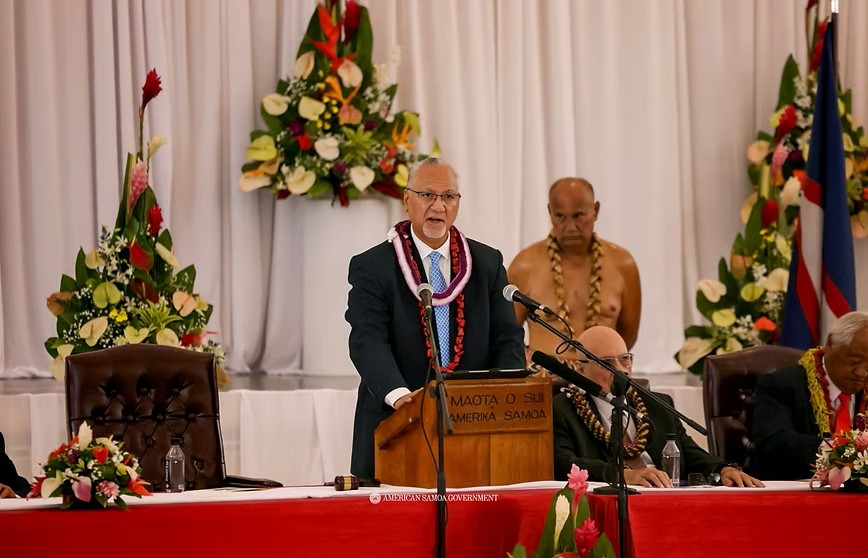 American Samoa Governor Pulaali’i Nikolao Pula’s 2026 State of the Territory address framed his agenda around a straightforward goal: restore trust in government by delivering real improvements for the people of American Samoa. He pointed to a push to diversify the economy, increase the territory’s power-generation capacity, and modernize critical infrastructure. That includes major transportation upgrades—from more efficient seaport operations to better airport access and stronger inter-island connections—as well as health care investments to expand emergency services, improve diagnostic capabilities, and upgrade clinical facilities. He also previewed a forthcoming collaboration with Google to deploy the “Le Vasa” cable, which he said will strengthen internet reliability, reduce outages, and unlock better access to online education, health care, and digital services. “Let us have a great year of love, respect, and hope,” he said in conclusion.
Read the full transcript here.
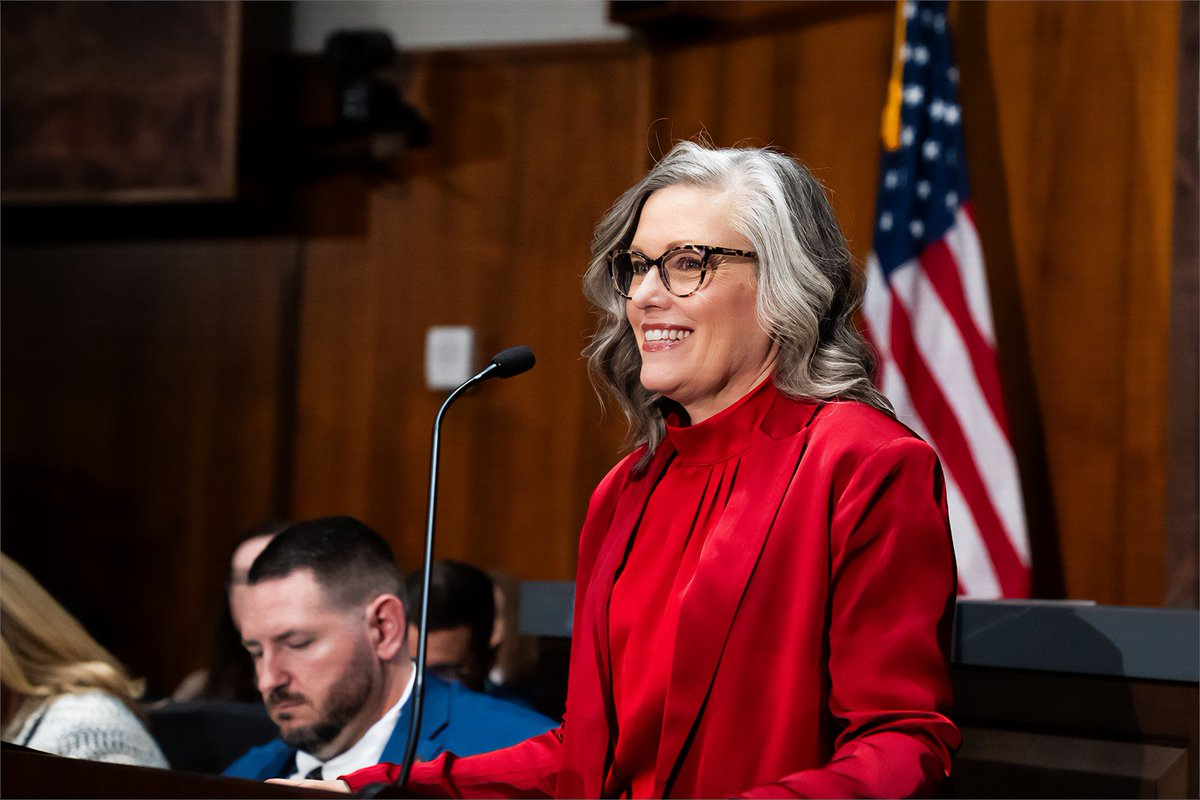 Arizona Governor Katie Hobbs’ 2026 State of the State featured announcements about the creation of a $2.5 million Housing Acceleration Fund to unlock lower-cost financing for affordable housing projects and an Arizona Affordability Fund to help working families cover the cost of rising electricity rates. She also announced a new Active Management Area in La Paz County to curb groundwater over-pumping and called for $30 million to fund a new Colorado River Protection Fund to “supercharge” the state's water conservation efforts.
Read a full transcript here, or watch a recording here.
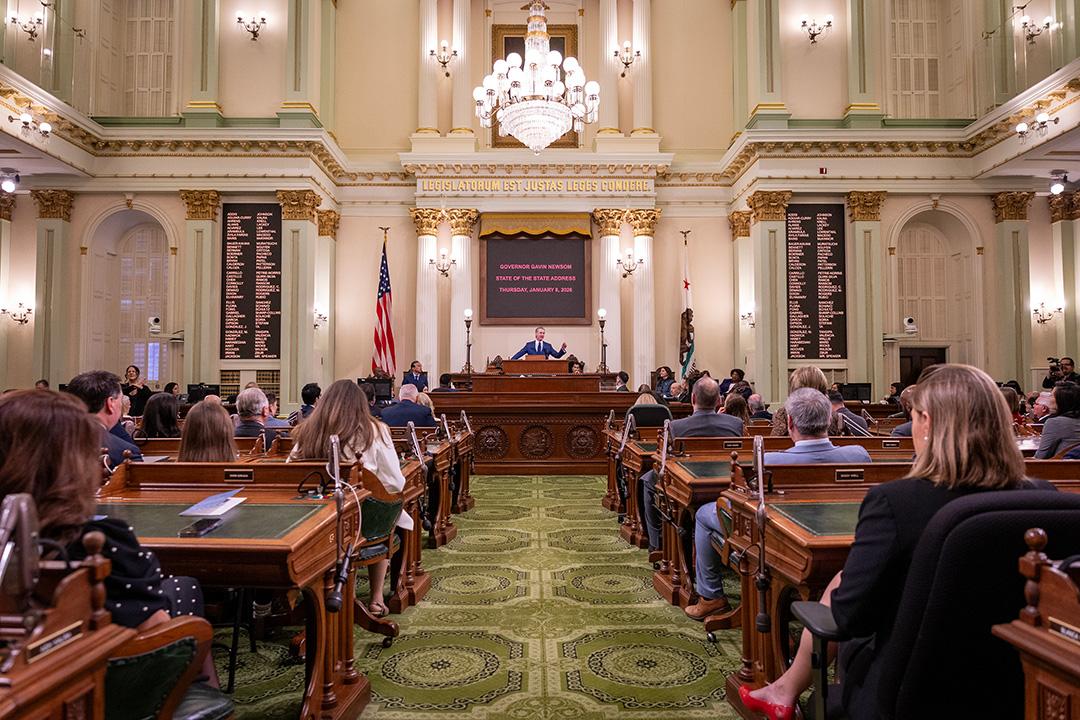 California Governor Gavin Newsom’s 2026 State of the State address – his first in front of the legislature in six years – focused on opportunities to build a safer, more affordable future. He proposed two new workforce initiatives, as well as an expansion of the state’s Homekey and Project Roomkey programs, and over $1 billion in annual mental health funding for housing and treating people living on the streets. With his State of the State address marking the first anniversary of the L.A. wildfires, he also proposed the creation of a rebuilding fund to bridge gaps between insurance payouts and rebuilding costs.
Read a full transcript here, or watch a recording here.
Colorado Governor Jared Polis’ 2026 State of the State address laid out a broad set of priorities for his final year as Governor. He supported legislation to enable housing development on underutilized land as well as efforts to make it easier to subdivide properties and reduce rates for homeowners' insurance. He also called for more than $120 million in new annual funding for the conservation of public lands and $127 million to support local water projects through the Colorado Water Plan. To increase government efficiency, he proposed a unified workforce development department and highlighted the need to improve statewide permitting regulations for energy and transmission projects and scaling emerging options like geothermal and carbon capture.
Read a full transcript here, or watch a recording here.
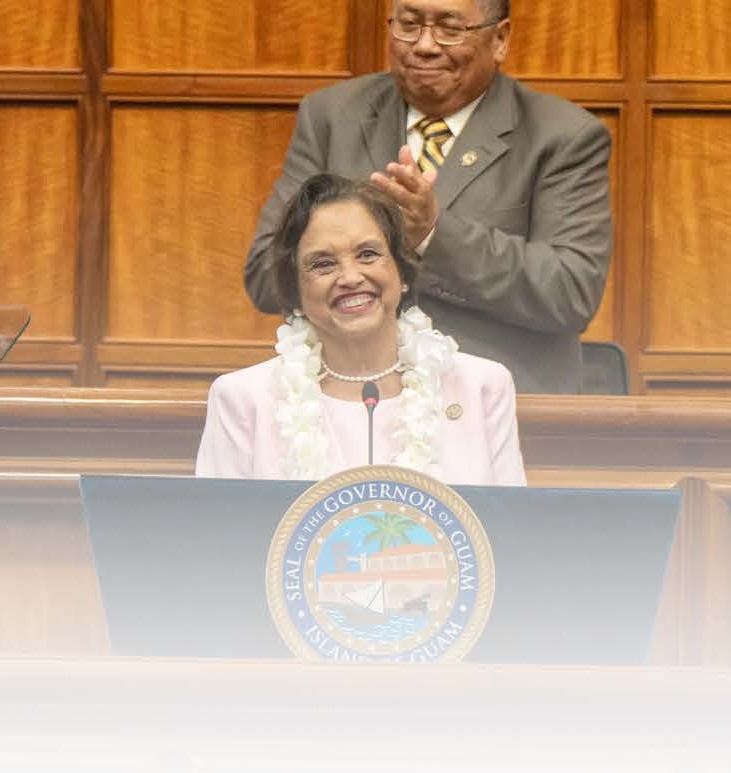 Guam Governor Lou Leon Guerrero’s 2026 State of the Island, her last as Governor, focused on the idea that if Guam is mission-critical to national defense, housing, infrastructure, utilities, and workforce readiness must be treated the same, through real federal partnership. She highlighted a push to diversify the economy through defense-linked advanced manufacturing, expanded international partnerships (especially with Taiwan), and stronger education/workforce pipelines, alongside plans to boost housing supply and improve responses to drugs and homelessness.
Read a full transcript here.
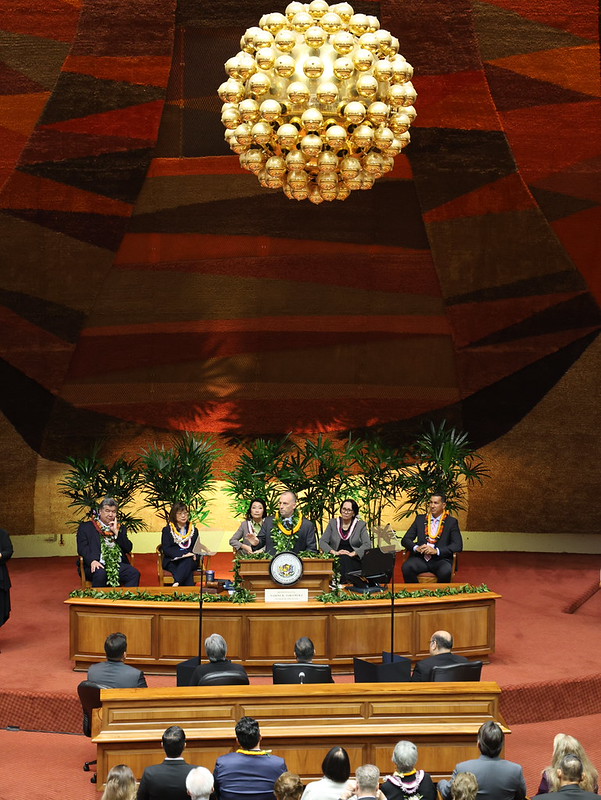 Hawai’i Governor Josh Green’s 2026 State of the State address focused on making island life more affordable – especially regarding housing. He asked for the legislature’s support in funding the 99-Year Leasehold Program, redeveloping public housing through Ka Lei Momi, and expanding the use of state lands for workforce housing. He also proposed investing $50 million per year to build additional kauhale villages, as well as $10.8 million to strengthen Family Assessment Centers and Housing First programs. He supported construction apprenticeships tied directly to affordable housing projects, creating public-private workforce pathways in healthcare, energy, and education, and expanding the Healthcare Education Loan Repayment Program. As rebuilding efforts continue on Lahaina, he announced construction and financing pathways for more than 2,200 permanent homes over the coming years, including 685 affordable units.
Read a full transcript here, or watch a recording here.
Idaho Governor Brad Little’s 2026 State of the State address outlined his “Enduring Idaho” budget plan, which revolves around fiscal responsibility and smart state-level budgeting. He celebrated $1 billion in new federal investment for rural health care across the state, spoke about maintaining investments in crucial water infrastructure, and touted new state investments to support graduate medical education and to address the state’s physician shortage.
Read a full transcript here, or watch a recording here.
Kansas Governor Laura Kelly’s 2026 State of the State address outlined legislative priorities to fully fund public schools and strengthen early literacy efforts through the Blueprint for Literacy initiative. She also proposed increasing special education funding and called on the legislature to approve additional investments in mental health, as well as a dedicated funding source for the Water Task Force.
Read a full transcript here, or watch a recording here.
Nebraska Governor Jim Pillen’s 2026 State of the State address focused on efforts to make the Government more efficient. He called for the creation of a blue-ribbon commission to recommend major reforms for the state’s K–12 funding formula, as well as legislation to increase per-student foundation aid. He also proposed merging the Department of Environment and Energy with the Department of Natural Resources into a new Department of Water, Energy, and Environment.
Read a full transcript here, or watch a recording here.
New Mexico Governor Michelle Lujan Grisham’s final State of the State address defined very specific proposals for this year’s legislative session. She proposed a $160 million recurring increase for universal childcare, a $150 million in tax credits for future-forward technologies like quantum computing and fusion energy, and a $1.5 billion transportation bonding package. She also asked the legislature to approve $110 million for new housing units and homelessness initiatives, an interest-rate buydown program to make mortgage payments more manageable, and zoning reform to expedite and increase housing production. Additionally, she called on the legislature to build and endow a new University of New Mexico School of Medicine, approve all medical compacts to make it easier for out-of-state licensed providers to practice in the state, and eliminate the gross receipts tax on medical costs and enact medical malpractice reform to drive down insurance premiums.
Read a full transcript here, or watch a recording here.
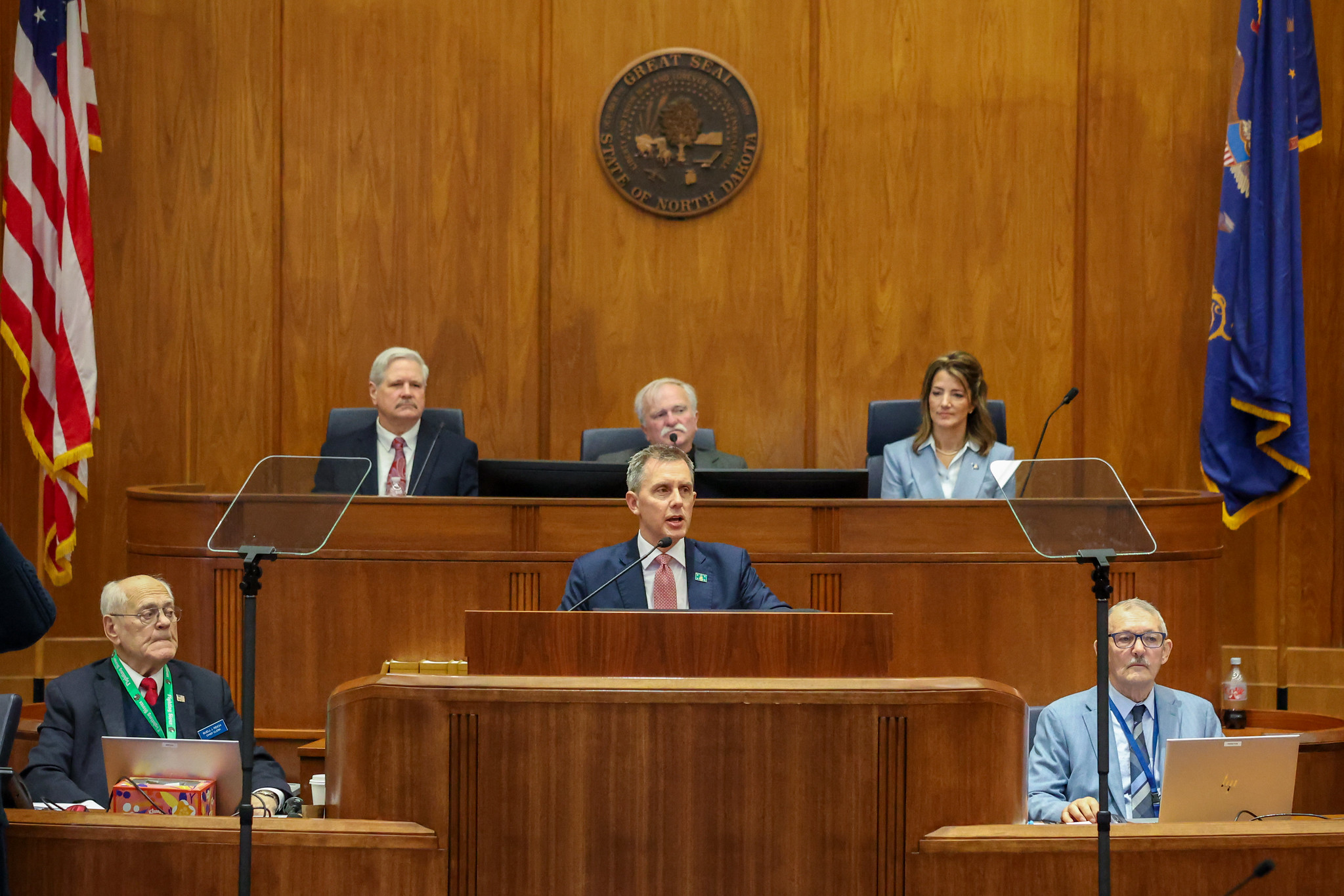 North Dakota Governor Kelly Armstrong delivered his second State of the State address ahead of a Special Legislative Session that was called to discuss the state's Rural Health Transformation Program. With only one topic on the docket, he said he hoped to set a record for the shortest State of the State address in history. With the money, Governor Armstrong said the focus will be on strengthening and stabilizing the rural health workforce, improving preventive care and nutrition, bringing high-quality health care closer to home with telehealth and mobile clinics, and connecting technology, data, and providers to make the state’s health care system more efficient.
Read a full transcript here, or watch a recording here.
Oklahoma Governor Kevin Stitt used his final State of the State to discuss the need for reducing regulations, protecting vulnerable Oklahomans, and securing the state’s financial future.
Read a full transcript here, or watch a recording here.
South Dakota Governor Larry Rhoden’s 2026 State of the State address outlined his “Opportunity Agenda.” He proposed creating a State Apprenticeship Agency, previewed his plan for the $189 million the state received as part of the Rural Health Transformation Plan – including the creation of Certified Community Behavioral Health Clinics and regional EMS hubs – and spoke about the need to expand the state's Keep Farmers Farming initiative, which provides estate and transition planning help so family farms can pass to the next generation. Finally, he recommended that the legislature expand Dakota State University’s SecureSD program to protect nonprofit utilities from cybersecurity threats.
Read a full transcript here, or watch a recording here.
Utah Governor Spencer Cox called on Utahns and lawmakers to recommit to the civic virtue and moral character that have sustained the American experiment for nearly 250 years during his 2026 State of the State address. To this end, Governor Cox urged zoning reforms, streamlined permitting, and investments in infrastructure. He also spoke about the need to target fentanyl trafficking, while expanding treatment and recovery, and focusing first on chronic homelessness tied to mental illness and addiction.
Read a full transcript here, or watch a recording here.
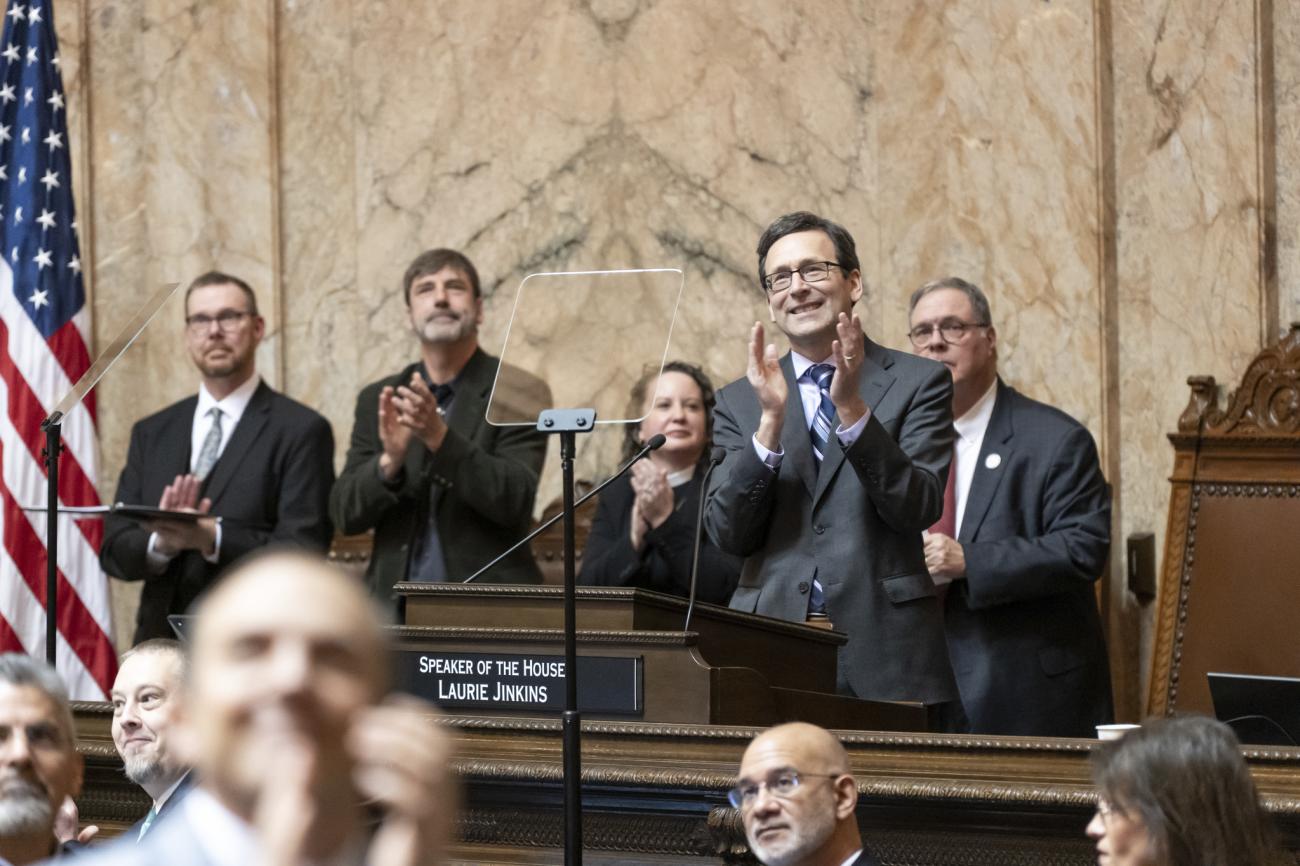 Washington Governor Bob Ferguson delivered his first State of the State address this year, during which he proposed the largest investment in transportation maintenance and preservation in over two decades and $1 billion to replace the state’s aging fleet of ferries. He also called on the legislature to approve $244 for affordable housing, along with House Bill 2151, which will make it easier for pre-made modular housing to meet building standards, as well as a one-time $200 household utility bill credit and $33 million to expand the State Home Energy Assistance Program. Finally, he supported the bipartisan House Bill 2104 to ensure that local fire departments have access to air resources to fight wildland fires.
Read a full transcript here, or watch a recording here.
Wyoming Governor Mark Gordon’s 2026 State of the State urged lawmakers to build the 2027–28 budget around core “essentials,” including energy and agriculture growth, stronger water protections, and better rural health care. He proposed fully funding the Asia trade office, launching a task force to modernize the Wyoming Business Council, restoring SUNBucks summer grocery benefits, increasing Medicaid support for OB/behavioral/in-home care, and fronting costs to speed renovations of the Wyoming Veterans Home in Buffalo.