09/04/26
Governor Kelly Armstrong convenes mental health leaders for Health Beyond Healthcare initiative workshop in Bismarck, North Dakota
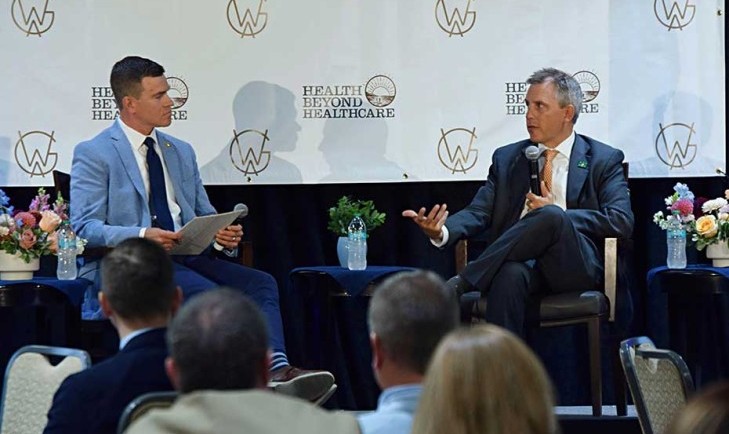
“There are very few places in public policy where if you get it right, you actually save lives... because mental health is health care.” North Dakota Governor Kelly Armstrong said at the first workshop of Hawaiʻi Governor Josh Green’s Health Beyond Healthcare initiative in Bismarck, North Dakota.
Held September 1–2 at the start of National Suicide Prevention Awareness Month, the workshop brought together policymakers, health care professionals, community leaders, and mental health experts from across the country to examine ways to improve behavioral health outcomes.
“This is a people problem. It will never be solved in the Capitol, and it sure as heck will never be solved in a committee room in Washington, D.C.,” Governor Armstrong continued. “The front lines...are your local health care workers, your local hospitals, your local law enforcement, and your local city commissioners... because they're different in Dickinson, North Dakota, than they are in Fargo, let alone Bismarck and Honolulu.”
The recognition that effective, bipartisan mental health policy must reflect the needs and realities of communities is at the heart of Governor Green’s Health Beyond Healthcare initiative.
Over the coming year, the initiative will continue to explore the challenges related to mental health throughout the West through workshops in Jackson Hole, Wyoming; Santa Fe, New Mexico; and Hawaiʻi, bringing together experts and practitioners to identify practical, community-driven solutions and share ideas.
 The Bismarck workshop featured a conversation between Governor Armstrong and WGA Executive Director Jack Waldorf, as well as discussions on youth mental health with North Dakota First Lady Kjersti Armstrong and Lieutenant Governor Michelle Strinden. Additional panels examined community-based care, criminal justice deflection and diversion, behavioral health integration, the digital transformation of the mental health system, and policy pathways for peer support.
Watch Governor Armstrong’s conversation and recordings of each panel by clicking the titles below.
For a quick summary, you can also watch the highlight video at the bottom of this page.
The Honorable Kelly Armstrong, Governor of North Dakota, sat down for a conversation with WGA Executive Director Jack Waldorf about North Dakota’s approach to improving mental health outcomes and lessons learned from the state’s efforts.
Panel 1: Centering Community-Based Care
As the mental health system has shifted away from institutional care, communities have become the primary setting for prevention, treatment, and recovery. Yet mental health infrastructure and other community-based services and supports often struggle to keep pace with demand and address the full range of people’s needs. Panelists discussed ways to strengthen the continuum of care and the broader network of services and supports in communities across the West so that people can access the resources they need to lead healthy, fulfilling lives.
- Pamela Sagness, Behavioral Health Executive Director, North Dakota Department of Health and Human Services
- Rebecca Farley David, Principal Advisor, National Council for Mental Wellbeing
- Jacqualine Gervais, CEO & Founder, Ridge Treatment and Reentry Center
- Shauna Reitmeier, CEO, Alluma
Panel 2: Criminal Justice Deflection and Diversion
People with mental health conditions are disproportionately represented in the criminal justice system, often moving through crisis services, law enforcement, courts, and jails when timely treatment and community-based alternatives are limited, placing additional strain on public services. This panel examined opportunities to intervene at key decision points before and after arrest – from pre-booking deflection to prosecutor- and court-led diversion – to disrupt the cycle of untreated mental illness, strengthen connections to community-based care, and reduce deeper justice-system involvement.
- Michael Champion, Senior Advisor for Mental Health and the Justice System, Office of Hawaiʻi Governor Josh Green
- Brandi McNeil, Deputy Director, Purpose Dignity Action
- Kim Hegvik, State’s Attorney, Cass County State’s Attorney’s Office
- Robyn Schmalenberger, Reentry Program Manager, North Dakota Department of Corrections and Rehabilitation
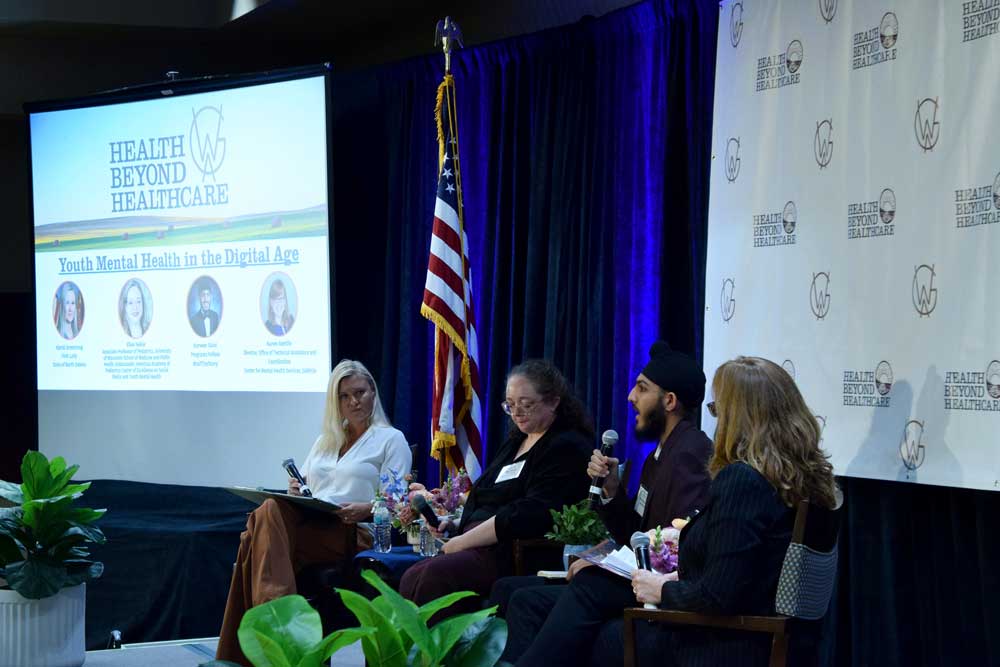
Panel 3: Youth Mental Health in the Digital Age
Digital technologies – including smartphones, social media, and artificial intelligence – are reshaping how young people learn, connect, and experience the world, while also introducing new risks to their mental health and well-being. This panel explored the effects of digital technologies on youth and highlighted policy opportunities and evidence-based approaches to address youth mental health in response to the rapidly evolving digital landscape.
- Kjersti Armstrong, First Lady, State of North Dakota
- Ellen Selkie, Associate Professor of Pediatrics, University of Wisconsin School of Medicine and Public Health; Ambassador, American Academy of Pediatrics Center of Excellence on Social Media and Youth Mental Health
- Harveer Saini, Programs Fellow, #HalfTheStory
- Karen Gentile, Director of the Office of Technical Assistance and Coordination, Center for Mental Health Services, Substance Abuse and Mental Health Services Administration (SAMHSA)
Panel 4: Interventions to Improve Youth Mental Health
In recent decades, the number of children and adolescents experiencing mental health challenges has increased significantly. This session examined how effective care delivery models and interventions can strengthen prevention, improve care coordination, and better support the mental health and well-being of school-aged youth and their families.
- Michelle Strinden, Lieutenant Governor, State of North Dakota
- Giovanni Salum, Senior Vice President of Global Programs, Child Mind Institute
- Katie Houle, Clinical Administrator, System of Care, North Dakota Department of Health and Human Services
- Alison Yoshimoto-Towery, Member, California State Board of Education; Executive Director, UC/CSU Collaborative for Neuroscience, Diversity and Learning & California Institute on Law, Neuroscience, and Education, UCLA School of Education and Information Studies
- Josh Omang, Associate Director of Engagement, BARR Center
Panel 5: Behavioral Health Integration
Integrating behavioral health into primary care helps people access mental health and substance use services where they already receive care. This approach reduces barriers to care, supports earlier identification and treatment, and strengthens coordination across providers. It is especially important in rural and frontier communities, where primary care providers frequently serve as the first – and sometimes only – point of access to behavioral health services. This panel analyzed innovative behavioral health integration models, as well as the policies, partnerships, and payment strategies needed to expand integrated, whole-person care and improve health outcomes.
- Melissa Markegard, Suicide Prevention Administrator, North Dakota Department of Health and Human Services
- Lacey Bergh, Market President, Blue Cross Blue Shield of North Dakota
- Jon Ulven, Licensed Psychologist & Department Chair of Adult Psychology in Fargo/Moorhead, Sanford Health
- Talitha Schnaidt, Director of Behavioral Health Services & Licensed Professional Clinical Counselor, Coal Country Community Health Center
Panel 6: Digital Transformation of the Mental Health System
Telehealth, artificial intelligence, and other innovations are transforming how mental health services are delivered. These technologies can revolutionize access to care, especially in hard-to-reach western communities, but pose unique challenges for providers and patients alike. This session focused on policies and best practices that enable the responsible use of technology to improve mental health delivery and support higher-quality care.
- Zainab Okolo, Senior Vice President of Policy, Advocacy, and Government Relations, The Jed Foundation
- David Cooper, Chair, Mental Health Technology Advisory Committee, American Psychological Association
- Brittany Sachdeva, Chief Operating Officer, Cibolo Health
- Mary DeVany, Associate Director, Great Plains Telehealth Resource and Assistance Center
Panel 7: Policy Pathways for Peer Support
Peer support specialists play an essential role in the behavioral health workforce, using their lived experience to promote recovery, help individuals navigate services, and connect people to care. Panelists discussed how western states can build and sustain a strong peer support workforce while highlighting federal recommendations to standardize training and certification, establish sustainable financing, and expand career pathways.
- Kelly Davis, Vice President of Peer and Youth Advocacy, Mental Health America
- Wendy White Tiegreen, Partner, Lexicon Strategies; Executive Director, David Ralston Institute for Behavioral Health and Developmental Disabilities, University of Georgia
- Heather Brandt, Behavioral Health Community Supports Manager, North Dakota Department of Health and Human Services
- Emma Quinn, Mental Health Advocate & Government Relations Liaison, ShareHouse