07/23/26
Best of the West: Can desalination boost water supply? Plus, new geothermal legislation; Oklahoma grass at the World Cup; 100,000 new jobs; and a rare thrift find in Oregon
.png)
The Western Governors' Association keeps you updated on the latest news in the West. Here are the top stories for the week starting July 20, 2026. (Photos courtesy of Adobe Stock Images, the Bureau of Reclamation, Mitchell Alcala, OSU Agriculture, and Sotheby’s).
Water management is always a top-of-mind issue for Western Governors, especially after abnormally dry winters like this past one. While western states have a long history of exploring innovative strategies in water recycling and conservation, there is one technology used around the world that hasn’t taken off in the United States: desalination.
While desalination is not a panacea for water supply issues, it is used heavily in arid countries around the world. Israel, for example, gets as much as 80% of its potable water from desalination.
So, could desalination provide a boost to supplies in drier western states? Water managers have been exploring this question for years, with some recent developments showing strong strides in the region.
For example, the Claude “Bud” Lewis Carlsbad Desalination Plant in California, which has been in operation since 2015, is significantly augmenting water supplies in the San Diego area. The plant’s daily output of 50 million gallons of fresh water has even pushed the normally dry San Diego into a water surplus. Now, given its extra supply, the city’s water authority is exploring an agreement with the Department of the Interior to allow other cities to tap into San Diego’s allotted supply of Colorado River water.
Introducing new water supplies into the river basin via desalination is a rare feat. A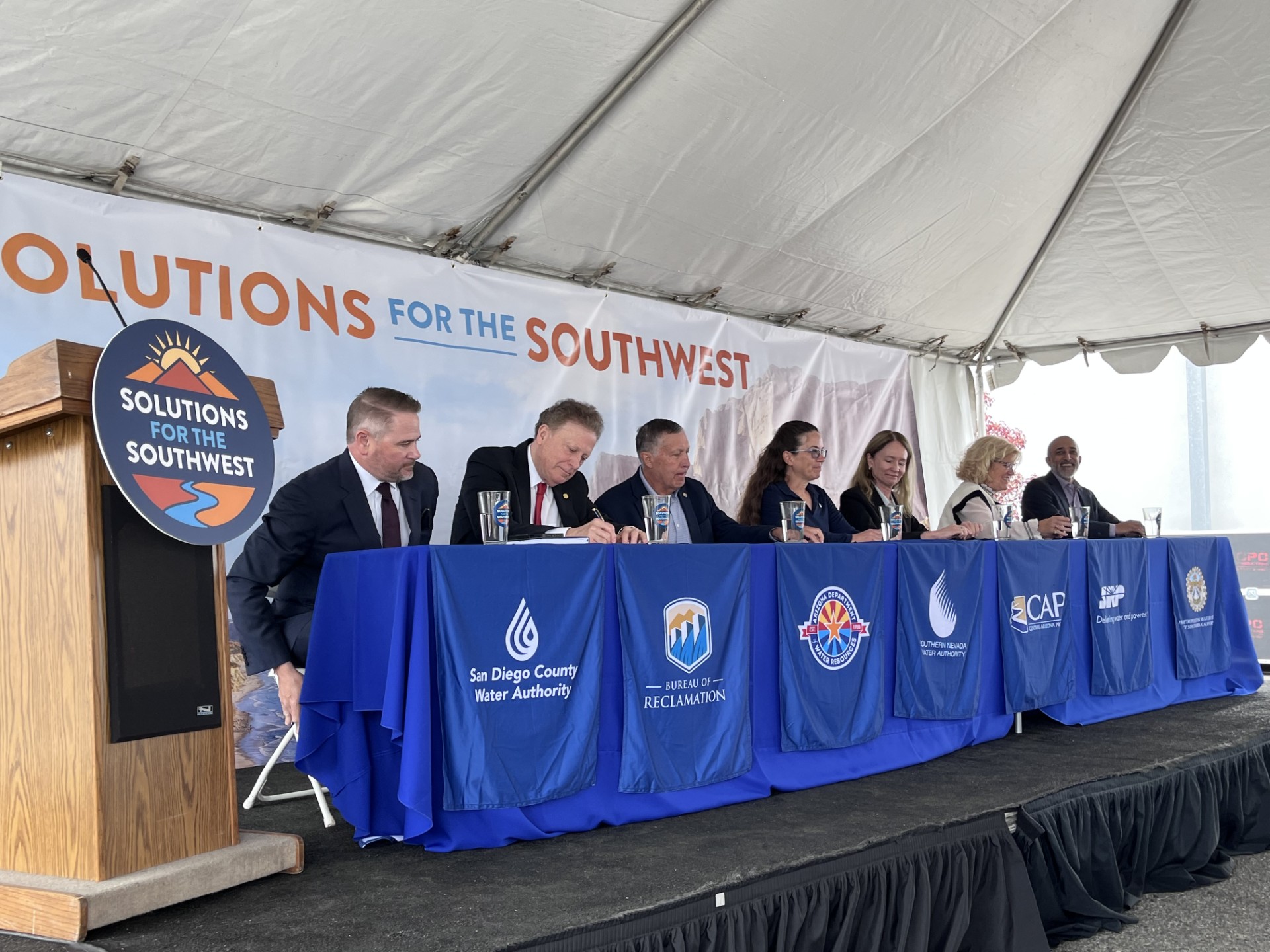 recent Memorandum of Understanding between the Bureau of Reclamation and regional water agencies is evaluating how new supplies can be integrated and potentially exchanged to improve reliability across the entire water system.
Elsewhere in the West, a new $1 billion desalination plant has been proposed in Texas’ Rio Grande Valley, which could produce between 50 and 100 million gallons of water daily.
The process of desalination, which typically involves moving salty or brackish water through a series of membranes to filter out salt and other solids, is highly energy intensive.
That’s why one company – OceanWell – is hoping to site a desalination plant more than four miles off the coast of California. Their design harnesses the immense pressure found thousands of feet beneath the sea to force salt water through reverse osmosis membranes, rather than using the energy that’s required to do the same process on land.
Another idea to bypass the energy issues associated with desalination is to site plants alongside nuclear power generators or bring in small modular reactors to power the systems. San Luis Obispo, California, for example, is studying the possibility of building a desalination plant at or near Diablo Canyon, California’s last operating nuclear power plant.
To learn more about Western Governors’ collective approach to water resource management issues, read WGA Policy Resolution 2024-07, Water Resource Management in the West.
Geothermal bills move forward: this week, the House approved the bipartisan Next-Generation Geothermal Research and Development Act, which aims to boost the research and commercialization of next-gen geothermal. It passed with an amendment specifically designed to support “supercritical” geothermal wells that can produce more energy than traditional wells.
On Tuesday, the House Science, Space and Technology Committee approved another piece of geothermal legislation – the Geo POWER Act – that would require the U.S. Department of Energy to finance at least three geothermal demonstration projects.
Learn more about geothermal in the West via the Heat Beneath Our Feet initiative report from Colorado Governor Jared Polis’ term as WGA Chair in 2023.
Oklahoma grass at the World Cup: while Oklahoma may not have hosted a World Cup soccer game this year, Sooner State innovation was behind many of the meticulous playing fields that you saw on TV over the past few weeks.
That’s because Oklahoma State University’s Turfgrass Team developed the top-of-the-line Tahoma 31 bermudagrass that has become the industry standard for sports fields worldwide.
When Spain beat Argentina on Sunday in the World Cup Final, it was OSU’s bermudagrass that made up the pitch at MetLife Stadium in New Jersey, in front of a global audience of nearly two billion people.
100,000 new jobs: last week, Nevada Governor Joe Lombardo announced that 100,000 new jobs have been created in the state since he took office. Nevada has seen strong growth in new businesses and small business growth, especially since the pandemic.
“When I took office, I made a commitment to create more opportunities for Nevada families and build a diverse economy that works for more people than ever before,” said Governor Lombardo. “We’re proud of this milestone, but we’re just getting started."
Rare thrift find: a 19-year-old in Oregon was browsing Goodwill bins earlier this year when he stumbled upon a vintage Wilt Chamberlain warmup jacket. After buying the jacket for $3, he discovered that it was actually an authentic item worn by Chamberlain during his championship with the Los Angeles Lakers in the 1972 NBA Finals.
In an auction this week, the jacket sold for nearly $90,000.