06/18/26
Best of the West: Battery storage booms, a new mental health facility in Montana, clean air projects in Colorado, cybersecurity by students in Idaho, and the California condor’s return to Oregon

The Western Governors' Association keeps you updated on the latest news in the West. Here are the top stories for the week starting June 15, 2026.(Photos courtesy of Adobe Stock Images, Energy Dome, Antora Energy, and).
According to a new report from the International Energy Agency (IEA), battery storage “is the fastest growing power technology” in the world after adding roughly 108 gigawatts of capacity in 2025 – a 40% increase compared to 2024. About half of that capacity (57.6 gigawatts) was added in the U.S.
Data from the U.S. Energy Information Administration shows the vast majority of the new energy storage capacity in America was deployed in the West. California added the most storage capacity with 10.8 gigawatts, Arizona came in a close second with 10.2 gigawatts, followed by Texas with 8.0 gigawatts, Nevada with 2.3, Idaho with 1.7 gigawatts, Oklahoma with 1.5 gigawatts, and New Mexico with 1.4 gigawatts. Utah and Oregon were tied for 10th with 0.8 gigawatt hours added.
This momentum continued in Q1 of 2026, according to a report from Solar Energy Industries Association, or SEIA, and with Benchmark Mineral Intelligence. The top three states for new energy storage deployment were all in the West: Texas added 2,696 megawatt-hours, Arizona added 940 megawatt-hours, and California added 936 megawatt-hours. The report also projects that more than 613 gigawatt-hours of energy storage will be installed by 2030.
New and better technologies are helping push those projections even higher.
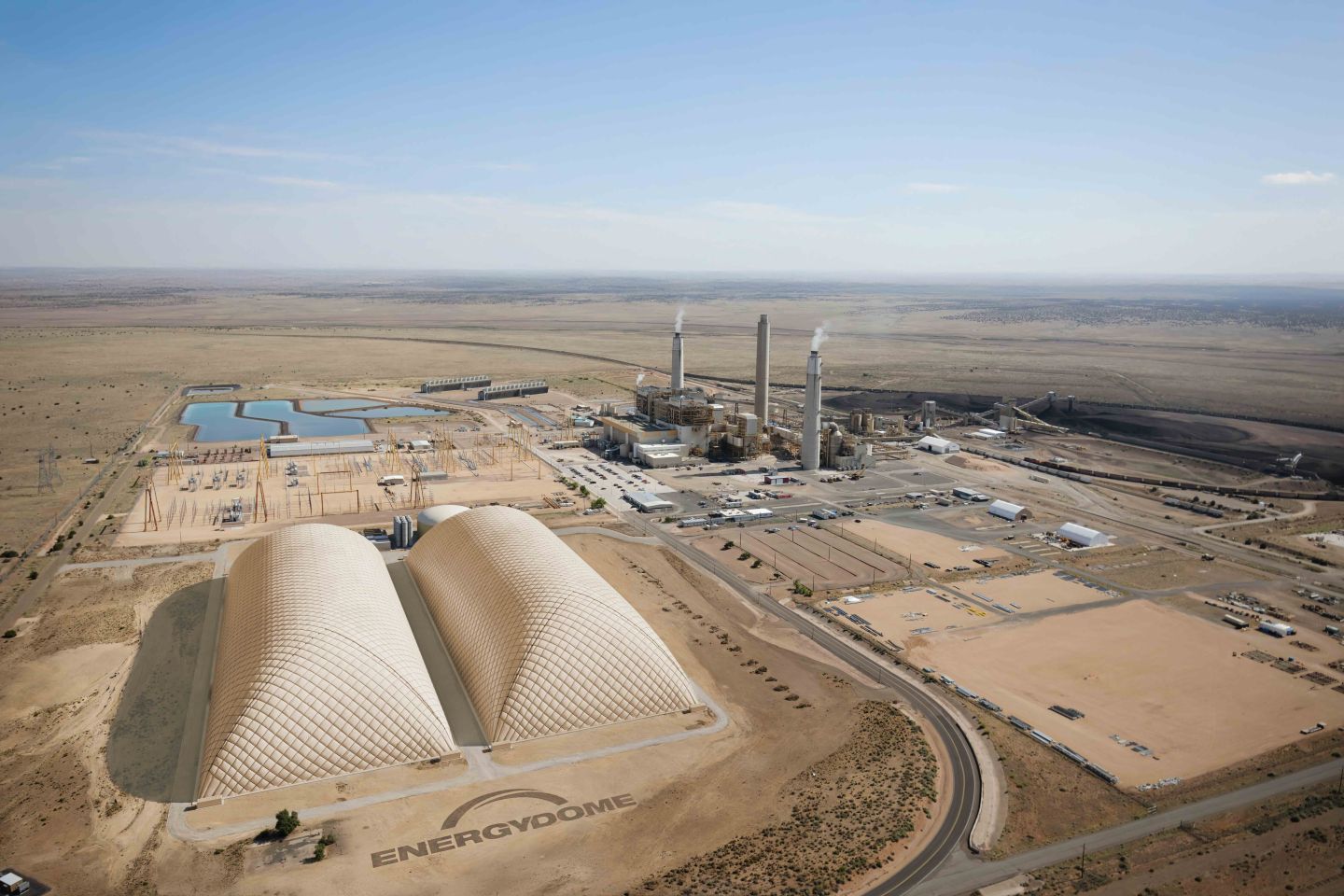 In Arizona, Energy Dome and Arizona’s Salt River Project (SRP) announced plans to build a 19 megawatt, 10-hour carbon dioxide-based battery storage project at SRP’s Coronado Generating Station in St. Johns, Arizona. Slated to come online in 2029, the project is backed by a cost-sharing agreement with Google to accelerate non-lithium-ion long-duration energy storage (LDES) technologies.
In California, the Tumbleweed project in Kern County became the first major battery installation in the U.S. that can discharge power for up to eight hours at a time — twice as long as typical non-hydropower energy storage facilities.
Virtual power plants are also expanding. These systems use distributed energy resources — including home batteries, solar panels, electric vehicle chargers, smart thermostats, and small generators — to function collectively as a single power source for the grid.
In California, Bidirectional Energy and Wallbox are outfitting 120 homes with bidirectional chargers as part of a state-funded pilot program that offers participants rebates for two-way charging technology. Sonoma Clean Power is also launching an effort to install smart thermostats for up to 1,000 income-qualified customers at no upfront cost.
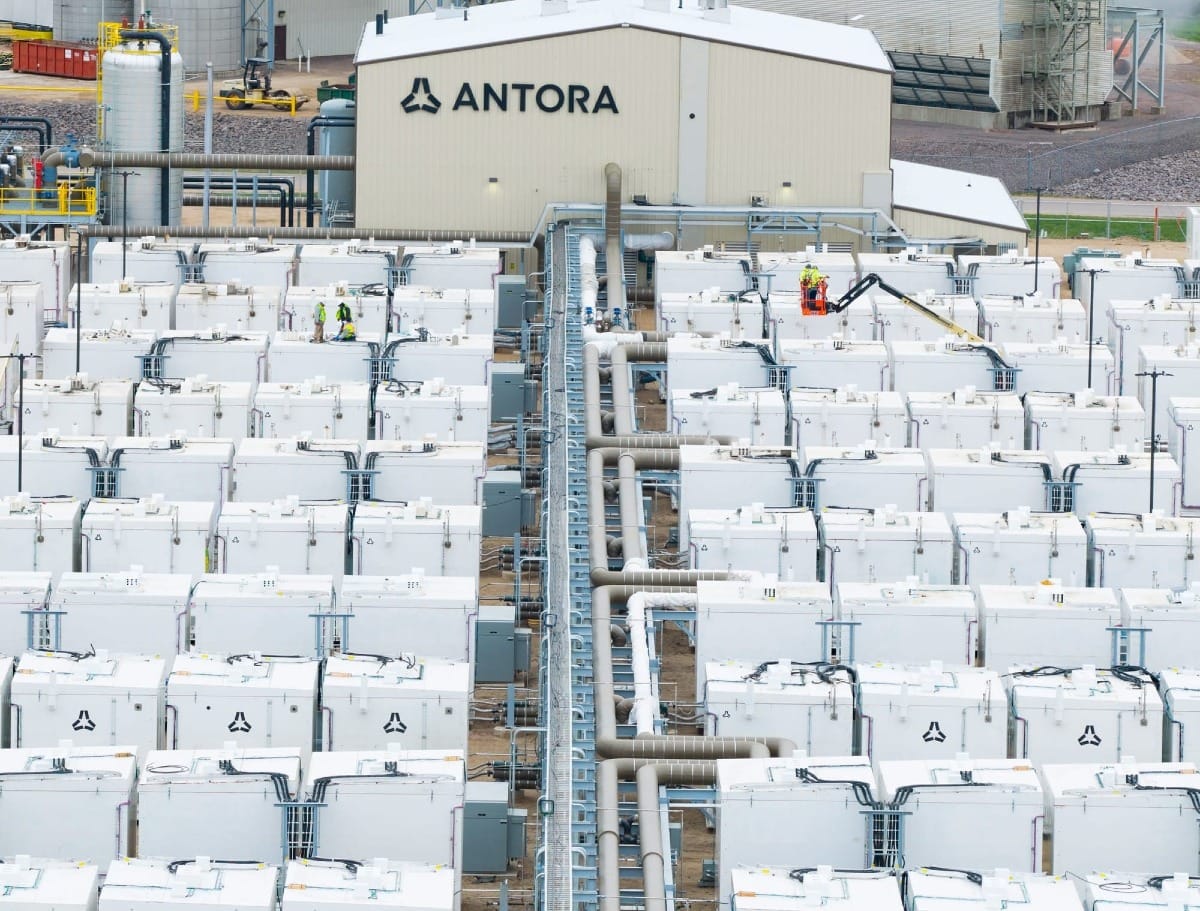 In South Dakota, POET Biofuels plant has partnered with Antora Energy of California to launch a thermal energy storage system adjacent to POET’s ethanol plant in Big Stone City. The 5 gigawatt-hour thermal energy storage facility will absorb excess, low-cost energy from wind turbines that might otherwise be lost due to capacity limits on the existing power grid and store it in carbon blocks for use when needed.
In Nevada, General Motors is expanding its collaboration with Nevada-based battery recycler Redwood Materials. The companies are deploying repurposed GM battery packs for stationary storage projects, including a planned installation at a GM manufacturing facility in Michigan. The project will provide 1.5 megawatts of power capacity and 7.2 megawatt-hours of energy storage, with GM estimating more than $3 million in electricity savings over the system's lifetime.
To learn more about advancements in battery storage, watch a panel from the final Energy Superabundance workshop in Salt Lake City with rPlus Energies, Torus, Noon Energy, Form Energy, and S2 Strategies.
Mental Health Access: The Montana Board of Investments acquired a 114-acre property west of Laurel for a new 32-bed forensic mental health facility. The facility will serve individuals in the justice system who are waiting for mental health evaluations or require treatment. The ultimate goal is to eliminate the 128-person backlog at the current facility in Galen.
The issue of mental health access will also be addressed in the WGA Chair initiative of Hawaiʻi Governor Josh Green, Health Beyond Health Care. Specifically, it will focus on strengthening mental health outcomes across states and territories by addressing both clinical care and the broader conditions that are foundational to mental health and wellbeing. Take a survey to help WGA design and execute the initiative.
Improving Interconnection: The Federal Energy Regulatory Commission approved a proposal from PJM Interconnection for an “expedited interconnection track” for large generating projects. Under the process, PJM will consider up to 10 interconnection requests a year on a fast-track basis for new or uprated capacity resources of at least 250 MW that can come online within three years.
Learn more about strategies for improving the energy interconnections process by watching an Energy Superabundance webinar with experts from Southwest Power Pool, Lawrence Livermore National Laboratory, and Platte River Power Authority.
Colorado Clean Air: The Colorado Energy Office announced $32.8 million in awards for industrial emissions reduction projects in Colorado – the fourth and largest round of awards to date through the Colorado Industrial Tax Credit Offering.
One of the projects, led by Anthropocene Colorado LLC, will install a biomethane collection technology that removes contaminants such as plastic and glass and converts waste and compostable packaging into sterile, usable compost. This is the first deployment of this technology in the United States.
Cybersecurity by Students: Boise State’s Cyber Operations and Resilience, or "CORe Program," is offering students the opportunity to work on real-world problems by offering their growing expertise to small towns that need help protecting their online information.
Return of the Condor: A California condor flew into Oregon last month, marking the first time in more than 120 years that one of the critically endangered birds flew in the state, according to the Yurok Tribe–led Northern California Condor Restoration Program.